How to Read an Eyeglass Prescription: SPH, CYL, AXIS, ADD, and Prism
SPH, CYL, AXIS, ADD, and prism explained, plus the five reasons two exams on the same eyes can hand you different numbers.
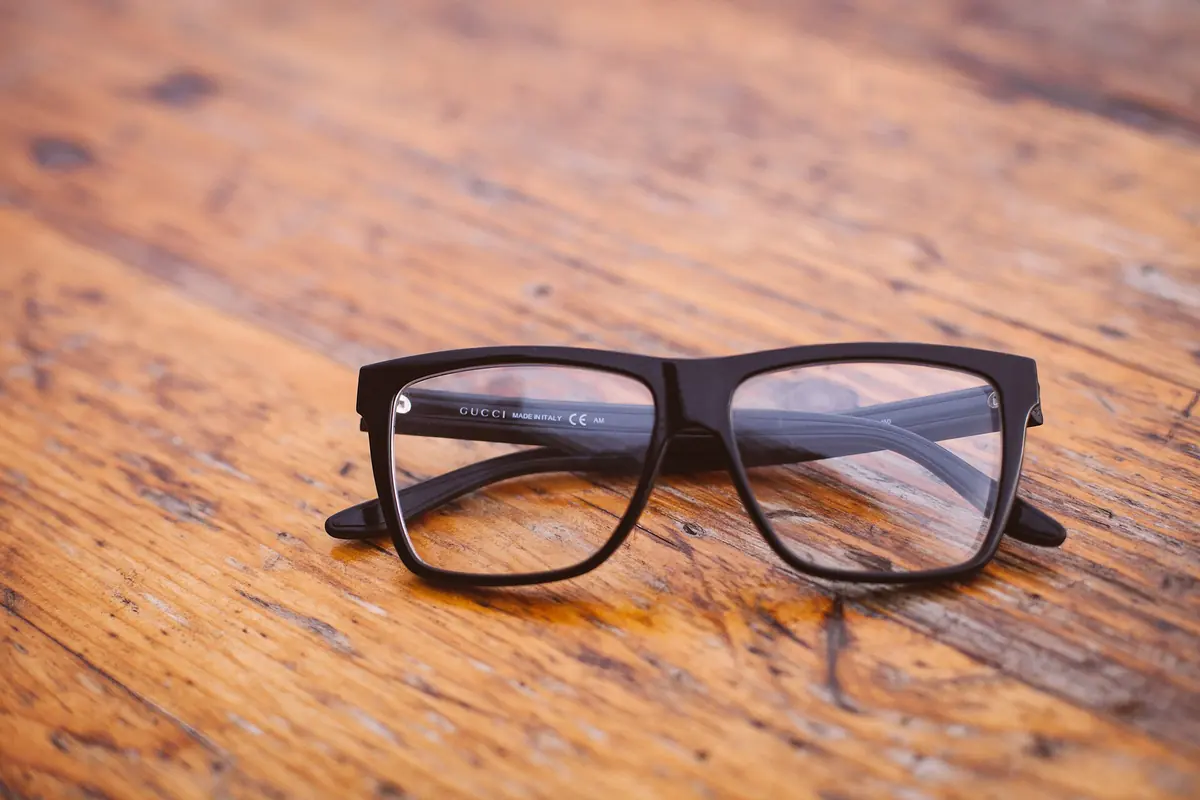
Two optometrists, one week apart, one pair of eyes. Different prescriptions. Both can be correct.
That is not a scandal. A prescription is a measurement taken under specific conditions — the room, the instrument, the distance the lens will eventually sit from your eye, whether your focusing muscle was relaxed while you read the letters — and change any one of those conditions and the number moves with it, usually by a quarter of a diopter and sometimes by a good deal more.
The form still means something exact. Every column has a job, and once you know which column does what, a new prescription stops looking like a verdict about your eyes and starts looking like a set of instructions with tolerances.
If you are choosing over-the-counter readers instead, the reading glasses guide covers that ground.
Every column does one job
The top block belongs to the right eye.
OD is oculus dexter and OS is oculus sinister, which is Latin for left rather than a warning about anything.
Sphere is the main correction, written in diopters, and it is the only column where the sign tells you what kind of eye you are working with. Minus is nearsighted. Plus is farsighted, and a plus number appearing for the first time in your forties is usually presbyopia arriving rather than your eyeball changing shape overnight.
Plano, PL, and DS all mean zero. They are entries, not blanks.
Cylinder describes astigmatism, which is a difference in focusing power between two meridians of the eye ninety degrees apart, and the number written is that difference rather than a separate strength.
Axis says where the difference sits — a number from 1 to 180, measured around a clock face where 90 is vertical and 180 is horizontal.
Axis without cylinder means nothing. A form reading 0.00 in the cylinder box and 90 in the axis box is telling you there is no astigmatism, not that the astigmatism runs vertically.
Add is extra plus power for near work, written for the reading zone of a progressive or bifocal and normally the same for both eyes. An add of +2.00 does not mean your distance power is +2.00; it means the near zone is your distance power plus two.
Prism is the odd one out. It sharpens nothing. It displaces the image, in prism diopters, with a base direction — BU, BD, BI, BO — so that two eyes which are not pointing the same way can still line up a single picture.
Pupillary distance is often printed at the bottom. That is fit information, not a power.
Two forms can describe one lens
The same lens gets two different descriptions.
A lens of +1.00 sphere with -2.00 cylinder at axis 180 is optically identical to a lens of -1.00 sphere, +2.00 cylinder, and axis 90. Add sphere and cylinder for the new sphere, flip the sign of the cylinder, rotate the axis by ninety degrees, and the same piece of glass has been rewritten in the other convention.
US optical labs and most optometry software write minus cylinder. Some ophthalmology practices, and equipment configured the other way, write plus cylinder.
Neither is wrong, and nothing in the frame changes when the convention does.
Put two forms side by side without converting one and the numbers look wildly different, which is how a routine recheck becomes an argument about whether your astigmatism doubled.
The rule is mechanical: new sphere is old sphere plus old cylinder, new cylinder is the old one with its sign flipped, and the axis turns ninety degrees.
Why two visits produce two numbers
Refraction is not a photograph of your eye.
Most prescriptions are written in quarter-diopter steps, so an instrument reporting two decimal places has to round somewhere. A reading of -2.37 lands on -2.25 in one office and -2.50 in another depending on which way the rounding runs, and that accounts for part of the gap between two exams without anything having changed. It is also the least interesting cause.
The second cause is you. A refraction ends with a conversation in which you choose between two options, then two more, and your answers drift with fatigue, with the chart, with how the room is lit — which is why the same examiner on a different afternoon can land half a step away without doing anything wrong.
Third is vertex distance, the gap between the back of the lens and the front of your eye. Past roughly plus or minus four diopters, shifting that gap by a couple of millimeters changes the power that actually reaches your eye, and the distance used during the exam is not necessarily the distance the finished frame will sit at.
Fourth is accommodation. A young hyperope can focus through a chunk of their own farsightedness, and a cycloplegic refraction — the one with dilating drops — measures the eye with that effort taken out of the way. Both results are legitimate, and the dilated one is the one that matters for a child.
Fifth is your old glasses. If someone puts your current pair into a lensmeter instead of refracting your eyes, they are measuring a manufactured object: its own tolerance, its own base curve, sometimes a lens warped by heat or bent by a frame that got sat on.
Four of those five are about how the number was produced, not about your eyes changing.
Most people compare sphere
The axis is the column that quietly ruins glasses.
A quarter diopter of sphere is close to invisible once you are past minus two. Rotating a cylinder is not close to invisible, because the error compounds across the whole lens, and it scales with how much cylinder there is: 1.50 diopters of astigmatism at the wrong axis is a different pair of glasses, while 0.25 diopters at the wrong axis is a rounding error with a degree symbol attached.
I don’t have a defensible cutoff to hand you, and I don’t think one exists that survives contact with individual eyes. What I would do is read the axis first whenever the cylinder is 1.00 or more, and compare it against the axis you have been wearing rather than against zero.
A prescription is not an order
It is a reading of your eyes on a particular day.
My judgment, and one some optometrists would push back on: if the sphere moved by a quarter diopter and the pair on your face is comfortable, you already own the right glasses. That purchase can wait.
Some offices will tell you the prescription should be filled as written. The form is the professional output, and filling it exactly is a defensible default — just not the only one.
The argument flips at the cylinder. A new axis with meaningful astigmatism, or a cylinder appearing for the first time, is worth filling, because that is the change people notice as headaches at a desk rather than as soft letters on a chart.
So is a change in add, once reading has started to feel like work. A stale add is a pair you take off instead of a pair you wear.
So is a pair whose coating has gone cloudy, whose temples no longer hold, or whose lenses are scratched into fog. Those failures get tolerated for years, and none of them shows up on a form.
Bring the old prescription with you. Ten minutes comparing two forms beats trying to remember last year’s numbers, and an office that cannot produce your previous form is telling you something about its record keeping.
A form explains focus and nothing else
Sudden changes are not a glasses problem.
A curtain across part of the visual field, a burst of new floaters, flashes of light, double vision that persists with one eye covered, pain, or redness around the cornea — all of that belongs to a doctor rather than to a lens order. Same for one eye that has moved sharply while the other stayed put.
Children are the other exception. A child’s prescription can move fast enough that the interval between exams matters more than the digits, and skipping a small change because it looks small is a bad trade.
The form is a description. Buying glasses is a purchasing decision, and most people treat the two as one thing.
More in Eye Care
The full section
Why the Same Contact Lenses Cost Different Amounts Everywhere
The lens is a commodity. What you pay comes from manufacturer price floors, annual rebates, and an eight-hour verification rule most buyers never hear about.
Read the guideReading Glasses at $5, $25, and $150: What You Actually Pay For
Drugstore readers, mid-price online frames, and optician single-vision lenses compared on optics, fit, and how long they survive daily carry.
Read the guide
ThinOptics vs Look Optic: Two Very Different Answers to the Same Problem
One is a folding lens that lives on your phone. The other is a conventional frame at a fair price. What you get, and which failure you can live with.
Read the guide